Webcam Chat Reframed as a Modern Camera-Led Conversation Page
If you still search in webcam language but do not want the stale feel of old webcam directories, this is for you. You get a modern camera-led conversation entry point with clearer control, clearer visibility logic, and better next-step paths.
- MatchBlur privacy
- No video recordings stored
- 18+ only

Why camera-led pages need a stronger commercial frame
Webcam Chat Reframed as a Modern Camera-Led Conversation Page captures users who are already thinking in camera terms, not just in generic chat terms. That makes the query commercially strong if the page explains the format well instead of repeating old webcam language.
A better camera-led page should clarify how the interaction works, how visibility and consent are handled, and where the user should go if they want a broader or narrower version of the same idea.
If the camera-specific angle is too narrow, keep video chat and 1v1 video chat close in the cluster.
What makes a camera-led page stronger
The page should sell camera clarity, mutual visibility logic, and user control without dropping into dated webcam-site clichés.
Camera-explicit format
The page clearly frames the interaction as camera-led instead of hiding the visibility model behind generic chat copy.
Visibility control
Users should understand how blur, reveal, exits, and reporting work before they start.
Face-to-face interaction
The value comes from direct live presence, not from profile browsing or text-only behavior.
Fast camera start
A strong page gets the user into a usable camera session without dragging out setup.
Flexible hardware fit
The product should still feel easy on phone, laptop, or desktop camera setups.
Clean recovery
If a match is poor, the user should be able to move on without friction or confusion.
Visual guide
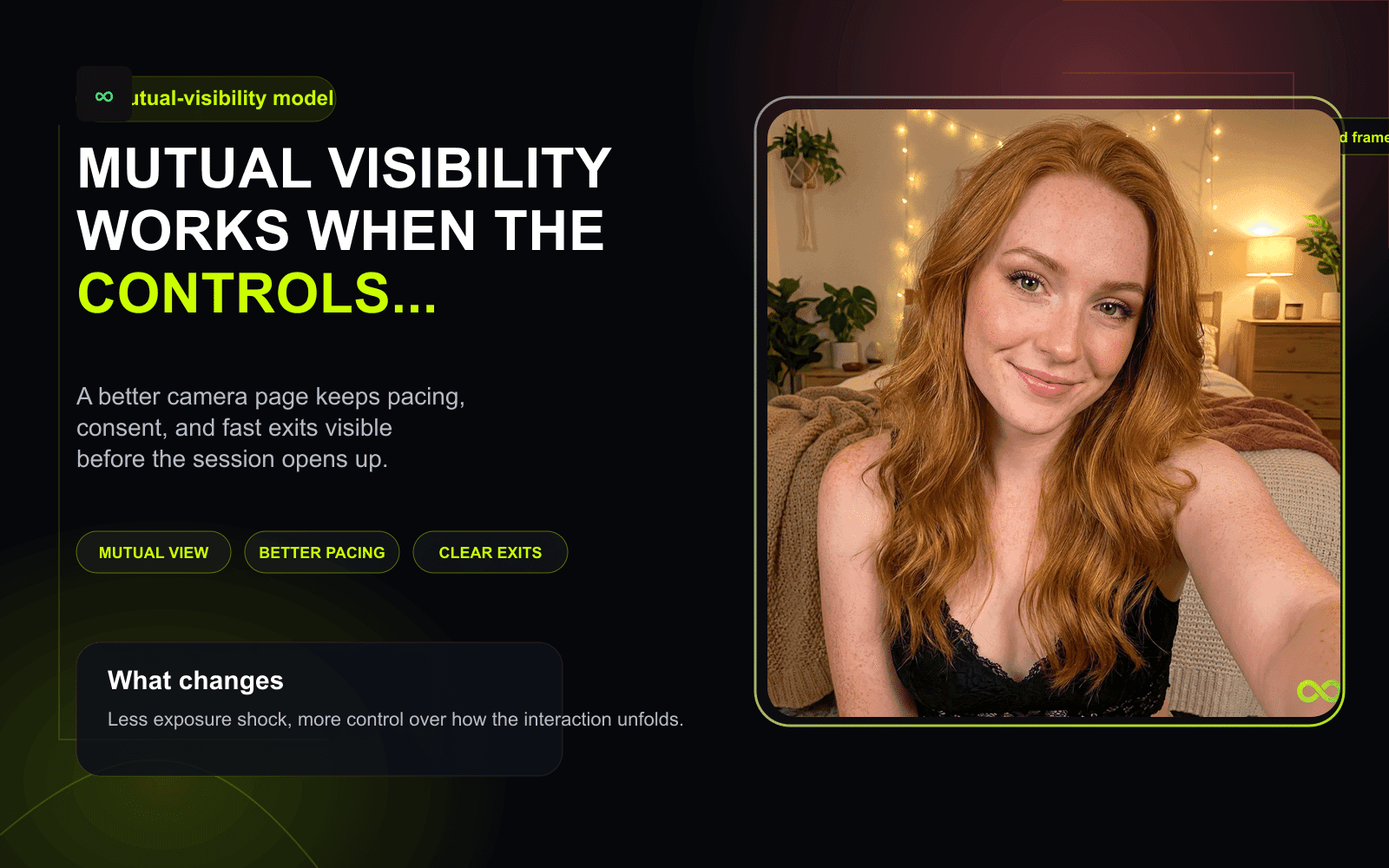
How camera-led pages should frame exposure and control
Camera-first queries are sensitive to pacing. The better landing page makes visibility feel mutual and deliberate instead of abrupt or chaotic.
Who these pages should convert best
Camera-led queries usually indicate a reader who already knows the mode of interaction matters.
You want camera-first interaction
MatchBlur fits when webcam chat reframed as a modern camera-led conversation page is really about direct camera presence for you rather than broad chat language.
You want the visibility model explained clearly
These pages should help the user understand what mutual video means before they start.
You want the broader cluster nearby
The user should still be able to move into video chat or 1v1 video chat if the query was too specific.
You want a page that feels current, not dated
The landing page should modernize the camera-led query instead of mimicking old webcam-site language.
How to use a camera-led page well
The page should make the camera format feel clear enough that the user knows what they are opting into before the first session begins.
Start only once the visibility model is clear
A strong page should explain blur, reveal, or mutual camera logic before the live session starts.
Test the comfort controls
Check whether exits, reporting, and reset behavior stay easy while the camera is live.
Move broader or narrower if needed
Use video chat for the broader live category or 1v1 video chat for the quieter direct format.
What separates a modern camera-led page from dated webcam SEO
The page should not sound like an old webcam directory. It should explain the format clearly and keep the user inside a modern commercial cluster.
| Decision point | Dated webcam-style page | Random Video Chat cluster |
|---|---|---|
| Format clarity | Uses webcam words without explaining the actual visibility model. | Explains how the camera-led interaction works and where control lives. |
| Trust cues | Relies on old visual language and vague safety claims. | Makes blur, reporting, and recovery part of the visible offer. |
| Cluster role | Feels isolated and dated. | Routes into video chat, 1v1 video chat, and related live pages. |
| Commercial fit | Feels like commodity SEO. | Feels like a current landing page for a camera-led use case. |
Why camera-specific pages still matter
Because users do not always search with product language. Sometimes webcam chat reframed as a modern camera-led conversation page is simply the clearest way they know how to express the camera-first format they want.
That makes the page commercially useful if it turns the query into a clear current product path rather than into a dated keyword shell.
The page should feel modern and explicit
That means precise copy, clear control framing, and clean internal links to the broader live cluster. The user should understand both the camera mode and the next best steps inside the site.
Supporting guides like video chat safety guide and video chat etiquette strengthen the page once the format is already understood.
Camera-led chat FAQ
Why does webcam chat reframed as a modern camera-led conversation page need more than old webcam language?
Because the query is stronger when the page explains how the camera-led interaction works now and how it connects to the rest of the commercial cluster.
What if I want the broader live category instead?
Use video chat. That page is the head term if the camera-specific query is too narrow.
What if I want a more focused one-to-one conversation?
Use 1v1 video chat. That page is the better fit when the user wants attention quality more than camera-specific wording.
What if I need more privacy cues first?
Use anonymous chat or the video chat safety guide if privacy is the main blocker before the first session.
Commercial sibling pages
These are the next pages inside the same commercial journey once the reader’s intent becomes more specific.
Use this if the user wants the more explicit mutual-camera wording of the same idea.
Use this if the query is more explicitly about camera interaction with strangers.
Use this if the camera wording is too narrow and the user needs the head live term.
Supporting guides
These editorial pieces support the decision once the landing page has already answered the commercial question clearly.
Useful when camera visibility raises safety questions before the first session.
Useful when the reader wants better camera-session behavior once they start.
Use camera-led intent as a clear, modern entry into the live cluster
A strong camera-led page explains the format clearly, keeps trust visible, and then helps the user continue into the broader cluster if the query becomes too narrow.
- MatchBlur privacy
- No video recordings stored
- 18+ only